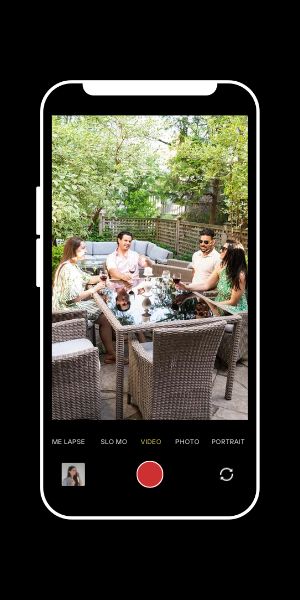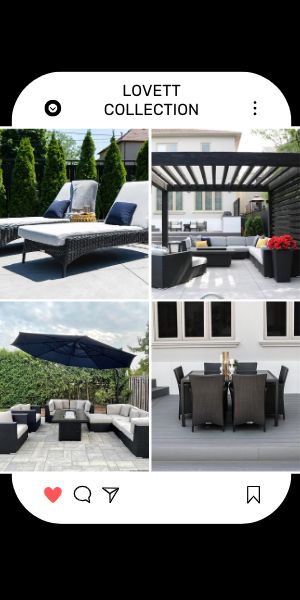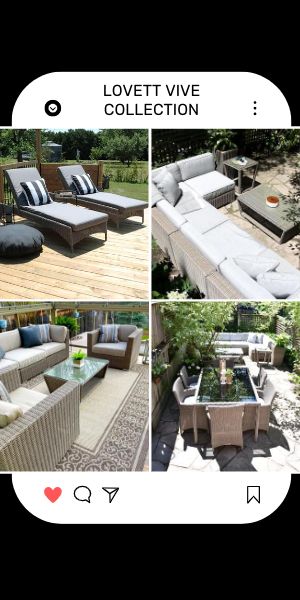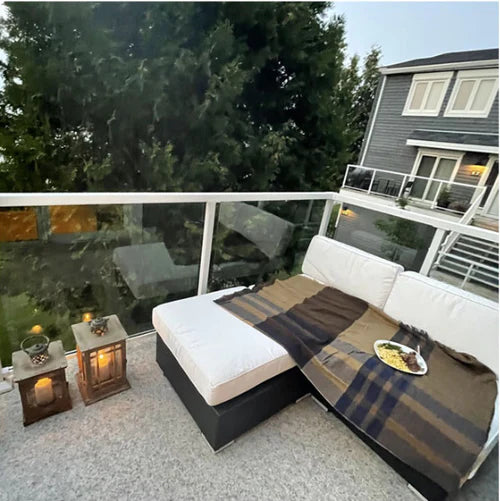



What is the best small patio layout for multi-functional spaces? If you have a compact patio, balcony, or backyard, you have probably asked yourself this question. You want to dine outside, lounge with a book, and entertain friends, but there is not enough room for separate areas.
The good news is that even the smallest patio can serve multiple purposes. It all comes down to smart layout choices, multi-functional furniture, and using vertical space. This guide walks you through the best small patio layout ideas for multi-functional spaces so you can get the most out of every square foot.
The Patio Rule of 3 for Small Spaces
One of the most effective frameworks for small patio design is the "Patio Rule of 3." This approach focuses on three priorities that matter more than anything else when square footage is limited.
First, choose right-size seating. A small patio can look charming when the seating fits or crowded in seconds when furniture is too bulky. Comfort does not mean oversized furniture. It means the seat feels good and the layout still leaves room to move. A compact cushioned chair can feel more relaxing than a giant deep chair that turns the patio into a maze.
Second, use vertical space strategically. When floor space runs out, walls, railings, and corners become valuable real estate. Tall planters, trellises, hanging baskets, and wall-mounted shelves add greenery and texture without taking up walking space.
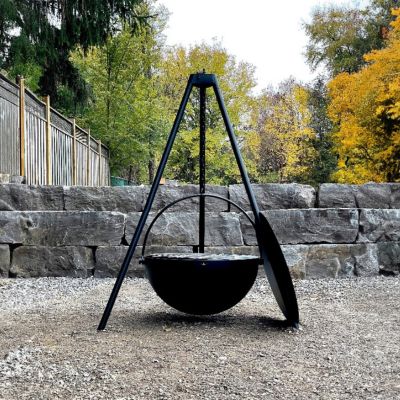
Third, design for one clear focal point. Small patios do not need five statement pieces. They need one strong centre and a few supporting details. A bistro table, a small fire pit, or a beautiful planter grouping can anchor the space and make it feel intentional.
Layout Ideas for Multi-Functional Small Patios
Front Porch or Wraparound Patio Layout
For front porches and wraparound patios, the layout should follow the natural flow of your home while creating a welcoming entry point. The space needs to balance function with curb appeal.
What to do: Arrange furniture along the porch's edges, using the corner as a natural transition point for wraparound styles. Place a small seating group near the front door to create a warm welcome, then extend the layout along the porch with additional chairs or planters. Keep walkways clear, use tall planters to frame the entrance, and hang lanterns or string lights along the railing for charm without clutter.
Best for: Front porches, wraparound patios, and spaces that serve as both an entryway and a gathering spot.
What to avoid: Do not block the front door. Keep furniture away from the main path and avoid oversized pieces that make the porch feel cramped. Pulling seating slightly forward creates a more intimate feel.
The Conversation Circle
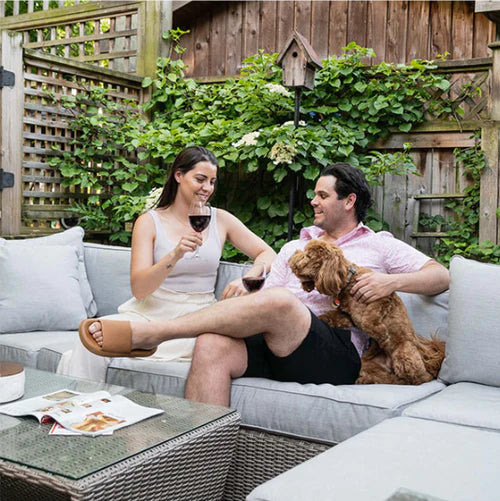
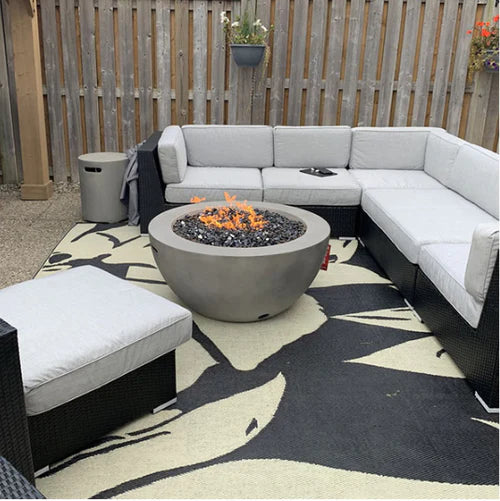
Arrange chairs and a loveseat in a half circle facing a central coffee table or fire pit. This layout encourages conversation and makes the space feel intimate. For a small patio, a loveseat with two chairs on either side works well. The open area in front of the loveseat makes the space feel larger.
Best for: Lounging, entertaining, and cozy gatherings.
Dining + Lounge Combo
Even in a small space, you can create two separate zones. Use a dining set in one corner and a seating area with a sofa and coffee table in another. The key is keeping furniture proportional. A bistro table and two chairs work better than a large dining table in tight spaces.
Best for: Patios that need to serve both meals and relaxation.
Banquette Seating for Narrow Patios
For narrow patios, line the perimeter with banquette-style seating. This allows you to have a comfortable place to lounge while also accommodating a bistro table for dining when needed. Use planters near the banquette to define the space.
Best for: Narrow patios, balcony spaces, and maximizing seating without clutter.
Single-Lounger Retreat
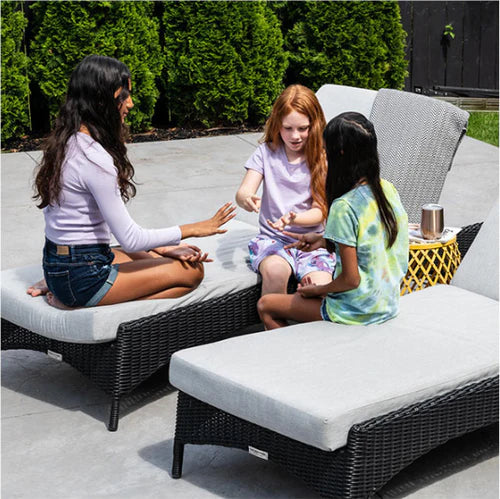
For very small patios where you are the primary user, a sun lounger is all you need. Add a side table, an umbrella, and a small rug, and you have a cozy personal getaway that still serves your daily needs.
Best for: Compact patios, solo use, and minimalism.
Choosing Right-Size Furniture
The single biggest mistake in small patio design is choosing furniture that is too big for the space. Here is how to get it right.
Think in seating roles, not furniture names. You need an anchor seat, one or two supporting seats, and one or two useful surfaces. That could mean a small patio sofa with two side tables. It might be two compact patio chairs with a bistro table between them. Sometimes it is a patio bench against the wall with one chair opposite it and a stool nearby.
Opt for slim profiles. Choose furniture with clean, narrow lines. A bistro set for two provides space for conversation and dining while still allowing for traffic flow.
Avoid oversized pieces. A chair that looks beautiful online but eats half the patio in real life is not the right chair for this job.
Multi-Functional Furniture That Earns Its Keep
When you only have room for a handful of pieces, make each one work overtime. Multi-functional outdoor furniture is the single best investment for a patio that needs to flex between uses.
Storage benches provide seating while hiding cushions, gardening tools, or kids' outdoor toys. They are the Swiss Army knife of balcony furniture.
Ottomans double as side tables, especially ones with removable trays on top. They can also serve as extra seating when guests visit.
Nesting tables pull apart when you need more surface area and tuck back together when you do not.
Foldable chairs and tables can be stored against a wall or in a shed for unexpected guests. They free up room for movement when not in use.
Modular seating can be rearranged depending on whether you are hosting two people or twelve. This flexibility allows you to adapt your patio to different needs.
Using Vertical Space to Save Floor Space
When floor space is limited, walls, railings, and corners become part of your patio. Vertical space is what helps a small patio feel layered instead of cramped.
Vertical Gardens and Planters
Tall planters lift the eye and make the whole patio seating area feel more tucked in. A pair of tall planters can act like visual bookends around a chair grouping. Three clustered planters at different heights can create a softer edge than one flat row of matching pots.
Wall-mounted planters and hanging baskets shift beauty upward. A bare wall suddenly becomes part of the room. A plain railing can hold greenery instead of only framing the view.
Trellises and Lattice Panels
Trellises and lattice panels are especially useful for creating privacy without having to build something huge. A slim trellis with climbing greenery gives the eye height and texture. Lattice panels can filter a view while still feeling airy.
Climbing plants like jasmine or clematis draw the eye upwards, adding height and lush greenery without reducing your walkable surface area.
Fabric and Lighting as Vertical Tools
Outdoor curtains can soften a compact patio beautifully. Even one curtain panel can create movement and warmth in a way hard materials cannot.
String lights create an upper layer that makes the patio feel more room-like. Hanging them along a railing, fence line, or wall edge defines the top of the space and gives character without adding clutter below.
Creating Zones Without Walls
You do not need walls to divide a small patio into functional zones. Here is how designers do it.
Use rugs to define each zone. A round rug under the dining table. A rectangular rug under the seating area. Rugs ground the space and make it feel organized.
Use planters as room dividers. A line of tall planters can separate a dining area from a lounge area without blocking light or views.
Use furniture placement. Position your dining set in one corner and your lounge furniture in another. The arrangement itself signals different uses.
Follow the "two zone" rule. Depending on the square footage, the max number of key functions is two. Do not try to squeeze dining, lounging, cooking, and playing into a tiny patio. Pick two and do them well.
Spacing Rules for Small Patios
Getting the spacing right is critical in a small patio. Here are the dimensions to aim for.
Between sofa and coffee table: 14 to 18 inches. This allows for comfortable reach and knee room.
Main walking paths: 30 to 36 inches. This gives people enough room to move between zones comfortably.
Behind dining chairs: 24 to 36 inches beyond the table edge. This allows chairs to pull out and guests to move around the table.
If you are short on space: Consider banquette seating against a wall. It takes up less room than individual chairs and can double as hidden storage.
Adding Style Without Clutter
Once the layout is right, add a few finishing touches to make the patio feel inviting.
Add an outdoor rug. An area rug defines the space and softens the look. Keep about 12 inches of patio surface showing around the rug's edges for a balanced look.
Add cushions and pillows. Throw pillows in coordinating colours make furniture look intentionally designed and more comfortable.
Layer your lighting. String lights create a warm glow overhead. Solar path lights define edges and guide movement. A lantern on a table adds a cozy touch.
Keep it simple. Cozy does not come from adding more stuff. A small patio feels cozy when the seating is comfortable, the palette feels calm, and the edges feel softened.
Frequently Asked Questions
What is the best way to arrange furniture on a small patio?
Start by deciding how you want to use the space. Then create zones for each activity. Use the Patio Rule of 3: right-size seating, vertical space, and one focal point. Keep walkways clear with at least 30 inches of space.
How do I make a small patio serve multiple purposes?
Choose multi-functional furniture like storage benches, nesting tables, and ottomans. Create zones using rugs and planters. Use vertical space for plants and lighting so floor space stays open.
What is the best furniture for a small patio?
Look for slimline chairs, bistro sets, foldable tables, and storage benches. Avoid oversized pieces that overwhelm the space. Modular seating is great for flexibility.
How do I add greenery to a small patio without taking up floor space?
Use vertical planters, wall-mounted shelves, hanging baskets, and tall planters in corners. Trellises with climbing plants add height without reducing walking space.
Should I use a rug on a small patio?
Yes. An outdoor rug defines the space and adds warmth. Keep about 12 inches of patio surface showing around the edges for a balanced look.
Conclusion
The best small patio layout for multi-functional spaces starts with the Patio Rule of 3: right-size seating, vertical space, and one clear focal point. From there, choose multi-functional furniture that earns its keep, create zones without walls, and use vertical space to save floor space.
Even the smallest patio can serve multiple purposes with the right layout. Focus on comfort, flexibility, and intentional design. Your patio will feel bigger than it actually is.
Looking for small patio furniture that works hard? WickerPark offers modular seating, storage benches, and compact furniture with genuine Sunbrella cushions. HDPE wicker over powder-coated aluminum frames. Made in Canada. Shop online or visit our showroom. Your multi-functional outdoor room starts here.